
7 Best Free AI Children’s Story Creators for Custom Tales (2026)
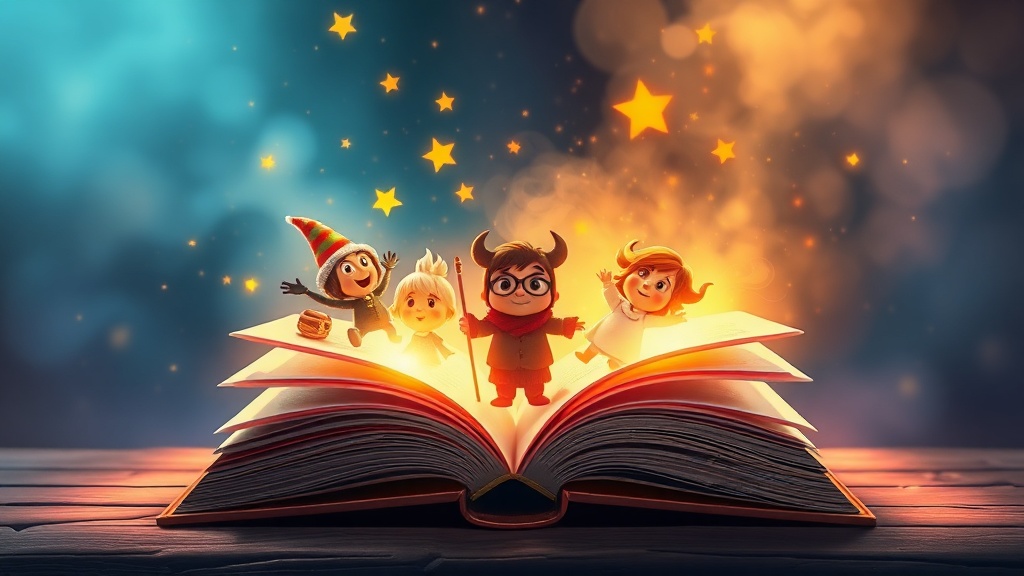
Creating a personalized bedtime story for your child has never been easier thanks to the rise of free AI children’s story creators with illustrations. These innovative platforms combine Large Language Models (LLMs) for creative writing with text-to-image generators to produce fully visualized books that you can read, print, or share digitally. Whether you are looking to teach a lesson about sharing or simply want to feature your child as the hero of a space adventure, these tools provide the perfect foundation for family creativity.
Why Use AI for Children’s Storytelling?
The primary advantage of using AI for children’s literature is the ability to create hyper-personalized content. Traditional books are static; they feature characters that children may not relate to or plots that don't address specific life events like starting school or moving to a new house. With AI, you can input your child’s name, their favorite toy, and a specific moral lesson, and the tool will weave these elements into a cohesive narrative.
Furthermore, the integration of image generation allows parents to visualize stories in ways that were previously impossible without hiring a professional illustrator. You can choose art styles ranging from classic watercolor and charcoal sketches to vibrant 3D animation styles. This makes the experience highly immersive for children, who often stay more engaged when they see a character that looks like them or reflects their specific interests.
Understanding the AI Story Generation Workflow
To get the best results from these tools, you need to understand the underlying mechanics of how they function. Most platforms operate on a two-step process: text generation and visual rendering. First, the AI text engine constructs the narrative flow, character dialogue, and plot structure based on your initial prompt. Then, the image generator interprets the scene descriptions to create corresponding illustrations.
It is helpful to think of yourself as an "editor-in-chief." While the AI does the heavy lifting, your input determines the quality of the output. Providing specific details—such as the setting, the emotional tone of the scene, or the specific art style—drastically improves the outcome. If you simply ask for a "story about a dog," you will get a generic result. If you ask for a "heartwarming story about a golden retriever named Barnaby who discovers a secret garden in his backyard in a whimsical watercolor style," the AI has much more to work with.
The Importance of Prompt Engineering
Prompt engineering sounds technical, but for children's stories, it is really just about being descriptive. Experts recommend the "Character-Setting-Action" formula. Define who the character is, where they are, and exactly what they are doing.
- Character: Give them a name, a distinctive feature (e.g., a blue scarf), and a personality trait.
- Setting: Describe the environment clearly (e.g., a bustling forest, a futuristic moon base).
- Action: What is the turning point of the scene? Is the character laughing, running, or solving a problem?
Top Features to Look for in Free AI Tools
When evaluating different platforms, focus on tools that balance ease of use with creative control. Many free versions are "freemium," meaning they offer a generous trial or a limited number of free daily generations. Look for tools that allow you to edit the text after it is generated. Sometimes the AI might make a logical error or use complex vocabulary that isn't age-appropriate; being able to tweak the prose is essential.
Another critical feature is the ability to adjust the aspect ratio. If you plan to print your book, you will want a portrait orientation (like a standard physical book). If you are showing it on a tablet, a landscape orientation might be better. Some high-end free tools also provide "character consistency" features, which help keep the protagonist looking the same from page one to the final page.
Comparison of Popular AI Storyteller Capabilities
| Feature | Basic Free Tools | Advanced AI Suites |
|---|---|---|
| Text Quality | Generic/Simple | Highly Creative/Thematic |
| Illustration Style | Limited/Fixed | Multiple Styles/Customizable |
| Editing | Minimal | Full Text & Image Tweak |
| Output Format | Digital Only | Print-Ready PDF |
| Learning Curve | Very Low | Moderate |
Step-by-Step: Creating Your First AI Book
If you are ready to start, follow this structured workflow to ensure your first project is a success. By breaking the process down, you avoid getting overwhelmed by the technology.
- Define the Moral or Theme: Before opening an AI tool, decide what the story is about. A clear purpose makes the story more impactful.
- Generate the Outline: Use an AI tool to brainstorm a 5-page outline. This prevents the story from rambling.
- Draft Page by Page: Do not try to generate the whole book at once. Work on one scene at a time to ensure the narrative flows logically.
- Refine the Illustrations: If an image doesn't match your vision, use the "regenerate" button. Most tools allow you to tweak the prompt slightly to get a better visual result.
- Review and Assemble: Once all pages are done, compile them into a digital document or a photo book service.
Overcoming Common AI Limitations
Even the best AI creators have "hallucinations" or logical lapses. For instance, an AI might forget that a character is wearing a hat in one scene and then put it back on in the next. As a parent, you are the final filter. If the AI generates an illustration with strange artifacts—like a character with six fingers or a distorted background—do not hesitate to regenerate that specific page.
Additionally, AI sometimes struggles with complex plot twists. If you are writing a mystery story, the AI might resolve it too quickly or fail to plant the necessary clues. It is often better to use the AI to write simple, linear stories with clear beginnings, middles, and ends. Save the complex, multi-layered storytelling for your own manual editing, and let the AI handle the descriptive imagery and descriptive prose.
Tips for Better Visual Consistency
If you find that your characters look different on every page, try using "seed" numbers if the tool provides them. A seed number acts as a template for the AI’s randomness. By keeping the seed constant and only changing the action in your prompt, you can often keep the character's appearance relatively stable throughout the book.
Educational Benefits for Children
Beyond entertainment, these tools are powerful educational aids. You can use them to create stories that help children practice reading. By generating a story using simple, repetitive sentences, you create a custom reader that is perfectly tailored to your child’s current reading level. This is far more effective than forcing them to read generic, uninteresting textbooks.
Furthermore, you can involve your children in the creation process. Ask them, "What color should the dragon be?" or "Where should the hero go next?" By letting them dictate the prompts, they learn the basics of computational thinking and creative expression. They begin to see technology as a tool for creation rather than just a passive source of consumption.
Ethical Considerations and Safety
When using AI tools, always prioritize safety. Avoid entering personal information, such as your child's full name, school address, or specific routines that could identify them in real life. Use nicknames or fictional names to keep the content safe and private.
Additionally, be aware of the "black box" nature of some AI platforms. While most reputable tools have safety filters to prevent the generation of inappropriate content, it is still best practice to review everything the AI produces before showing it to a child. Always ensure the generated stories align with your family's values and standards.
Final Thoughts
Building a library of custom, AI-generated children's stories is a rewarding way to blend technology with traditional bedtime rituals. By mastering the art of the prompt and using the right tools to bring your ideas to life, you can create a unique collection of books that your children will cherish for years to come. Start small, experiment with different art styles, and focus on the joy of collaborative storytelling. If you are ready to begin, pick one of the accessible platforms mentioned here and draft your first page today—you might be surprised by how quickly a simple idea blossoms into a complete, illustrated adventure.
Frequently Asked Questions
Can I sell the stories I create with these free AI tools?
Most free AI tools grant you ownership of the generated content, but you must check the specific terms of service. Some platforms restrict commercial use to their premium tiers, so always verify the license before publishing.
Are these AI-generated illustrations consistent across pages?
Maintaining character consistency is the biggest challenge for AI. While some advanced tools offer 'character reference' features, many free versions may produce slightly different versions of your protagonist on each page.
Do I need technical skills to use these AI story creators?
No, most modern AI story creators are designed for non-technical users. They typically use a simple 'prompt-and-click' interface where you describe the plot and the AI handles the writing and image generation.

Nethmina is the founder of AI Tools Wire and an AI software developer who builds automation tools and tests new AI products hands-on every week.
📬 Get new articles by email
Subscribe for the latest AI tools, guides, and tips. No spam — unsubscribe anytime.
Related Articles

7 Best Free AI Email Subject Writers to Boost Your Open Rates
Discover the best free AI email subject writers to increase your open rates. Learn how to craft high-converting subject lines using these expert-tested tools.

7 Best Free AI Chatbot Creators to Automate Basic Queries
Discover the best free AI chatbot creators that handle basic queries effortlessly. Streamline your customer support and save time with these top-rated tools.
7 Free AI Query Writers to Optimize Your SQL Code in 2026
Boost database performance with these 7 free AI query writers. Learn how to optimize SQL code, fix syntax errors, and speed up complex data retrieval workflows.