
Copy.ai vs Perplexity: Which AI Tool Is More Reliable for Research?
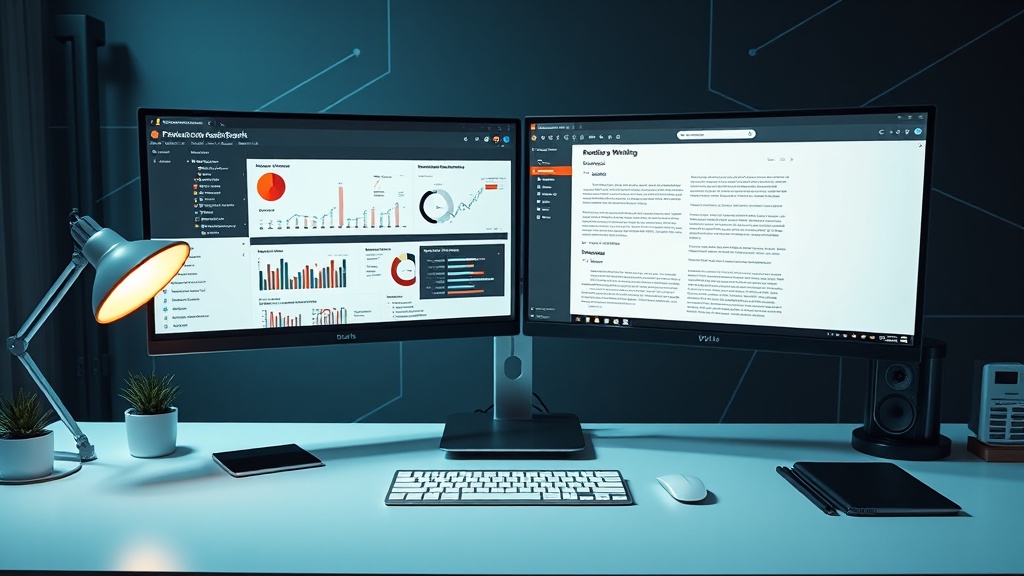
Choosing between Copy.ai vs Perplexity for research reliability requires understanding that these tools were built with fundamentally different end goals in mind. While both leverage advanced large language models to process information, one is a powerhouse for content marketing workflows, while the other functions as a sophisticated, citation-focused search engine.
If your primary objective is to build a high-quality blog post or a series of social media updates, your needs differ significantly from someone attempting to conduct a literature review or verify technical data. In this guide, we break down the architectural differences and real-world performance metrics of both platforms to help you decide which belongs in your tech stack.
The Architectural Difference: Generative vs. Search-First
At the core of the Copy.ai vs Perplexity debate is the difference between a generative writing assistant and an answer engine. Copy.ai is built on a framework designed to streamline the creative process; it excels at turning prompts into structured, brand-aligned content. Its research capabilities, while present, act as a secondary feature meant to support the writing process rather than drive the discovery phase.
Perplexity, conversely, is built as an "answer engine." Its primary function is to crawl the web, synthesize information from multiple sources, and present that information with verifiable citations. When you ask Perplexity a question, it prioritizes the retrieval of real-time, accurate data. Its architecture is optimized for truth-seeking and source attribution, which makes it inherently more reliable for research-heavy tasks where precision is non-negotiable.
Why Context Windows Matter
Copy.ai often handles larger chunks of text at once, allowing you to feed in existing documents to maintain a specific tone or style. This is excellent for consistency but can sometimes lead to "hallucinations" if the model relies too heavily on its training data rather than live search results. Perplexity’s context window is focused on the immediate query, ensuring that the answer provided is grounded in the most recent search results it has indexed.
Evaluating Research Accuracy and Citations
When evaluating which tool is more reliable for research, the most critical metric is how each platform handles citations. Perplexity is the clear winner in transparency. Every time Perplexity provides an answer, it attaches clickable footnotes that lead directly to the source material. This allows you to verify the claims immediately, reducing the risk of relying on outdated or misinterpreted information.
Copy.ai does not offer the same level of granular citation. While it can browse the web to gather information, the output is typically formatted as a finished piece of content—like an article or a caption—rather than a list of findings with source links. If you are writing a report that requires a bibliography or strict adherence to source material, Copy.ai requires significant manual fact-checking, whereas Perplexity does the heavy lifting for you by pointing you toward the primary source.
The Problem with Generative Hallucinations
Generative AI tools that focus on writing, like Copy.ai, are prone to "hallucinations"—instances where the AI confidently states a fact that is factually incorrect. Because Copy.ai is incentivized to produce creative, flowing prose, it may sacrifice accuracy for readability. Perplexity, by contrast, is constrained by the search results it retrieves. If the search results are thin, Perplexity is more likely to tell you it cannot find a definitive answer, which is a much safer outcome for a researcher.
Workflow Integration: Where Copy.ai Shines
While Perplexity wins on raw research accuracy, Copy.ai wins on workflow efficiency. If your research is a precursor to creating content, Copy.ai is far more effective. It allows you to organize your findings into "Workflows," where you can automate the transition from raw research to a draft, then to an SEO-optimized article. It integrates with your existing marketing stack, meaning you can move from brainstorming to publishing without leaving the platform.
Comparison Table: Feature Breakdown
| Feature | Copy.ai | Perplexity |
|---|---|---|
| Primary Focus | Content Creation | Research & Search |
| Source Citations | Limited/Internal | Robust/Footnoted |
| Brand Voice | Highly Customizable | General/Conversational |
| Content Automation | Advanced Workflows | Minimal |
| Real-time Data | Optional/Limited | Native/Default |
| Best For | Marketers & Writers | Researchers & Analysts |
When to Use Which Tool
To determine which tool you need, look at the "last mile" of your task. If the final output of your work is a creative document, a marketing email, or a blog post, Copy.ai is your best friend. You can use Perplexity to conduct the research, then copy the findings into Copy.ai to generate the final content. This "best-of-both-worlds" approach is common among professional content strategists who refuse to compromise on either accuracy or productivity.
If your task involves market analysis, competitor research, or technical documentation, stay within the Perplexity ecosystem. Its ability to pivot between different search models and focus on specific domains (like academic papers or news) provides a level of depth that a writing-first tool like Copy.ai simply cannot replicate.
Handling Complex Queries and Multi-Step Research
Perplexity shines when you have to perform iterative research. You can ask a follow-up question, and it understands the context of the previous turn in the conversation. This "conversational search" is vital for complex topics where you need to drill down into specifics. For example, if you are researching the impact of AI on the healthcare industry, Perplexity allows you to refine your query to focus on specific regulations or technologies without starting the search over.
Copy.ai treats each prompt more like an isolated task. While it has a chat interface, it isn't optimized for the back-and-forth nature of deep research. It is optimized for "batching"—taking a set of instructions and executing them to produce a document. Attempting to use Copy.ai as a primary research engine for a complex, multi-day project will likely result in frustration, as you will find yourself constantly correcting the AI’s creative output to match the facts you have uncovered.
Expert Tips for High-Reliability AI Research
To get the most out of these tools, adopt a modular research strategy. Here are three expert tips for high-reliability AI usage:
- The "Verification Loop": Always use Perplexity to generate your initial findings. Once you have a list of facts and sources, perform a quick manual check on the top three links to ensure the context of the citation matches the AI’s summary.
- Avoid Prompt Overload: When using Copy.ai to turn research into content, provide the research as context in the prompt. Do not ask Copy.ai to "research and write" in one go if the topic is highly technical. Instead, provide the bulleted facts and ask it to "summarize these facts into a professional article."
- Leverage Perplexity’s "Focus" Modes: Perplexity allows you to limit your search to specific areas, such as Reddit, Academic papers, or YouTube. Use these modes to filter out the "noise" of general web results, which significantly improves the quality of the information you receive.
Final Thoughts
The choice between Copy.ai and Perplexity is not about which tool is "better," but about which tool serves your specific stage of the content lifecycle. For the research and discovery phase, Perplexity is objectively more reliable, providing the transparency and source-tracking necessary for accurate fact-finding. For the production and distribution phase, Copy.ai offers the automation and brand-alignment tools required to scale high-quality content.
The most efficient experts use both: Perplexity to build a foundation of truth and Copy.ai to turn that truth into compelling narratives. By separating your research engine from your writing engine, you eliminate the biggest risks associated with generative AI while maintaining a high-output workflow. If you are serious about producing top-tier content, start your process with a deep dive in Perplexity, then transition to Copy.ai to polish your work into its final form.
Frequently Asked Questions
Can I use Copy.ai for deep academic research?
Copy.ai is primarily designed for content marketing and copywriting workflows rather than deep academic research. While it has internet-connected features, it lacks the citation-heavy, source-verification engine that makes Perplexity a better choice for academic or technical fact-finding.
Does Perplexity replace a traditional search engine?
For many users, yes. Perplexity acts as an answer engine that synthesizes information from multiple live web sources, providing direct answers with footnotes, which is often more efficient than sifting through traditional blue-link search results.
Which tool is better for long-form content production?
Copy.ai is significantly better for long-form content production. It offers robust project management, brand voice customization, and workflow automation that Perplexity does not provide.
Our Rating

Nethmina is the founder of AI Tools Wire and an AI software developer who builds automation tools and tests new AI products hands-on every week.
📬 Get new articles by email
Subscribe for the latest AI tools, guides, and tips. No spam — unsubscribe anytime.
Related Articles
Notion AI vs Grok: Which AI Works Better for Note-Taking in 2026?
Choosing between Notion AI vs Grok for note-taking? We compare their features, integration, and efficiency to help you boost your productivity in 2026.
Jasper vs Canva AI: Choosing the Best Tool for Content Creation
Struggling to choose between Jasper vs Canva AI? We compare these powerhouses to help you master visual design and high-converting copy for your brand.
ElevenLabs vs Descript: Which AI Voice Tool Wins for Podcasting?
Choosing between ElevenLabs vs Descript for podcasts? Discover which AI voice tool offers the best editing, cloning, and production features for your workflow.