
DALL-E vs Leonardo AI: Which Image Generator is Best for Art?
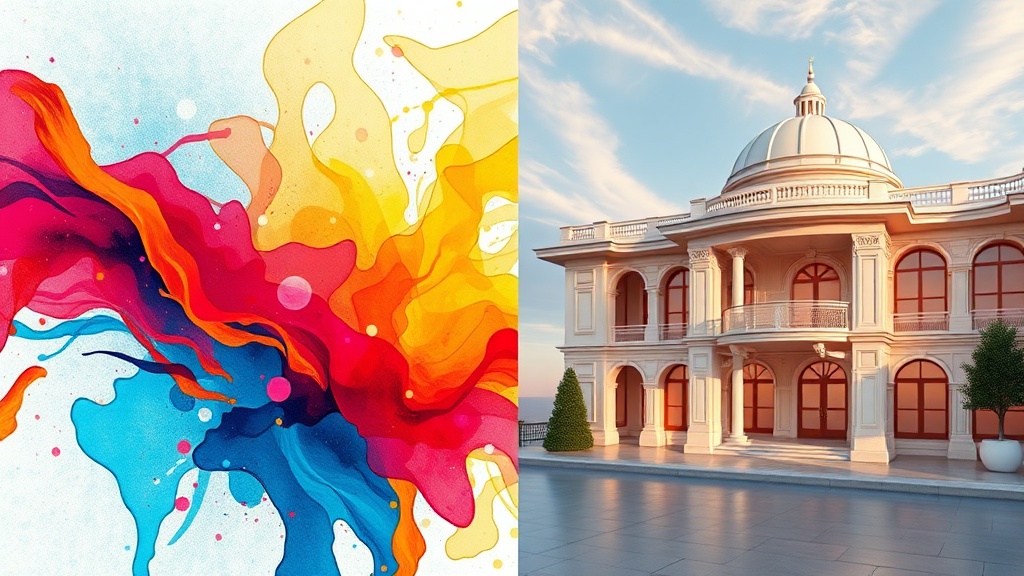
Choosing the right platform for your creative projects requires understanding that DALL-E vs Leonardo AI represent two fundamentally different philosophies in the generative art space. While DALL-E focuses on seamless integration and accessibility through natural language, Leonardo AI empowers creators with granular control and highly specific artistic workflows. Deciding between them depends less on which tool is "smarter" and more on whether you prioritize instant results or deep, iterative customization.
Understanding the Core Philosophy of Each Platform
At its heart, DALL-E, developed by OpenAI, is designed to be the ultimate "prompt-to-image" engine. It excels at interpreting complex, multi-layered descriptions and translating them into visually coherent images with minimal user intervention. It is the powerhouse of convenience, integrated deeply into chat interfaces where you can refine results through simple conversation. If you can describe it, DALL-E can likely render it, making it the preferred choice for marketers, casual creators, and users who want a "one-shot" solution.
Leonardo AI, conversely, is built for the "prosumer" and professional artist who views AI as a collaborative tool rather than a vending machine. It provides a comprehensive dashboard filled with sliders, model selectors, and specialized features like canvas editing and image guidance. Leonardo assumes you have a specific vision that requires fine-tuning, offering a suite of tools that allow you to dictate not just the subject matter, but the underlying structure, lighting, and stylistic nuance of the output.
The Ease of Use Spectrum
DALL-E thrives on simplicity. The interface is intentionally sparse, removing technical friction so the user can focus entirely on the prompt. This makes it an incredibly powerful tool for rapid prototyping and brainstorming. You do not need to understand latent spaces or sampling methods to get a high-quality result.
Leonardo AI requires a steeper learning curve. The interface is dense with options, such as choosing from various fine-tuned models (e.g., RPG-focused, photorealistic, or anime-specific), adjusting "Guidance Scale," and toggling "Contrast" settings. While this can be intimidating for a complete beginner, it provides the essential levers for professional-grade output that the average user would struggle to achieve with a simpler interface.
Comparison of Features and Control
When evaluating DALL-E vs Leonardo AI, the difference in control is stark. Leonardo AI offers a modular approach to creation. You can choose a base model, apply a style filter, and then use "Image Guidance" to force the AI to respect the composition of an existing sketch or photo. This level of control is invaluable for artists who need to maintain a specific brand aesthetic or character consistency across a series of images.
DALL-E operates more as a black box. While you can ask it to make edits to a generated image, you are essentially relying on its internal logic to interpret your instructions. You lack the ability to lock in specific seeds, train custom models, or force the AI to adhere to a strict structural wireframe. For users who prioritize speed and general aesthetic quality, this is a feature; for those who need pixel-perfect precision, it is a limitation.
| Feature | DALL-E | Leonardo AI |
|---|---|---|
| Ease of Learning | Very High | Moderate |
| Custom Model Training | No | Yes |
| Structural Control | Limited (Prompt-based) | High (Image Guidance) |
| Integration | Deep (Chat/Enterprise) | Standalone/API |
| Best For | Speed & Concepting | Professional Artistry |
The Power of Custom Models
A major differentiator for Leonardo AI is the "Fine-Tuning" feature. Users can upload a set of their own images—such as their own character designs or a specific art style—to train a custom model. Once trained, the AI essentially "learns" that aesthetic, allowing the creator to generate infinite variations that consistently match the source material. DALL-E does not offer this, meaning you will always be working within the general "DALL-E style" unless you are a master of complex prompt engineering.
Workflow Integration: Where Do They Fit?
Your choice should also be dictated by your existing digital stack. DALL-E is often integrated into broader enterprise workflows, such as Microsoft’s ecosystem or via API for developers building apps. If your goal is to generate images quickly for a social media post, a blog header, or a quick concept sketch during a meeting, DALL-E is nearly impossible to beat. It integrates into the flow of conversation, allowing you to iterate on a prompt in real-time.
Leonardo AI is designed as a destination. It is a full-featured creative suite that includes an "AI Canvas," where you can perform in-painting and out-painting with professional tools. You can essentially use it as an extension of Photoshop. For professional illustrators, game developers, and concept artists, Leonardo is a workspace where hours can be spent refining a single composition, rather than a chat interface for quick bursts of creativity.
Practical Use Case: Building a Game Asset
If you were developing a game, you would likely find both tools useful but in different ways. You might use DALL-E to generate broad, high-level concepts for environments or character backgrounds to quickly build a mood board. Once you have settled on a specific look, you would transition to Leonardo AI, using its image guidance tools to ensure every new asset matches the style of the first, and training a custom model to keep your main character consistent across different poses and scenes.
Pricing Structures and Accessibility
Most AI image platforms utilize a credit-based system, and both DALL-E and Leonardo AI are no exception. DALL-E is typically accessed through paid subscriptions for premium services, often bundled with broader AI chat tools. This provides a high-value proposition for users who need a powerful chatbot alongside an image generator. The barrier to entry is low, but you are effectively locked into the platform's ecosystem.
Leonardo AI operates on a freemium model. They are quite generous with their free daily credit allowance, which resets every 24 hours. This makes Leonardo an excellent sandbox for hobbyists who want to experiment with advanced features without a monthly commitment. Their paid tiers are tiered based on the number of images you generate and the complexity of the models you train, allowing you to scale your costs alongside your professional needs.
Tips for Mastering Your Chosen Platform
Regardless of which tool you choose, mastering the "prompt" is essential. However, the way you prompt differs between the two. For DALL-E, focus on descriptive, natural language. Use phrases like "a cinematic wide shot of a futuristic city at sunset, high detail, photorealistic." DALL-E excels at understanding the "vibe" of a sentence.
For Leonardo AI, think like a photographer or a technical director. Your prompts should include technical specifications: "35mm lens, f/1.8, bokeh background, sharp focus on subject, volumetric lighting, 8k resolution." Combine this with the platform’s technical settings—adjusting the "Guidance Scale" to ensure the AI doesn't deviate too far from your prompt, or using "Negative Prompts" to explicitly tell the AI what you do not want to see (e.g., "blurry, distorted, low resolution").
Expert Insight: The "Hybrid" Approach
Many top-tier AI artists use a hybrid approach. They use DALL-E to generate the initial raw ideas because its interpretation of complex, abstract concepts is often more creative and "out of the box." They then take those generated images, import them into Leonardo AI, and use the "Image Guidance" and "Canvas" features to fix the anatomy, sharpen the details, and apply a professional, consistent style. This creates a workflow that leverages the creative power of one and the technical precision of the other.
Final Thoughts
The decision between DALL-E and Leonardo AI ultimately comes down to your personal creative goals. If you value speed, ease of use, and integration into a conversational workflow, DALL-E is the clear winner. It is a powerful, intelligent tool that removes the technical barriers to entry, making high-quality art accessible to everyone from writers to business owners.
If you are a professional artist, designer, or game developer who needs granular control, consistent styling, and the ability to train custom models, Leonardo AI is the superior choice. It offers the depth and technical infrastructure required to push generative AI beyond simple "one-off" images and into the realm of professional production. We recommend starting with the free tier of Leonardo AI to test your technical skills, while utilizing DALL-E for your rapid-fire brainstorming sessions. Start experimenting with both today to discover which interface feels more like an extension of your own creative process.
Frequently Asked Questions
Is DALL-E better for beginners than Leonardo AI?
Yes, DALL-E is generally more accessible because it functions via natural language prompts without requiring knowledge of technical settings or model training.
Can I train my own models in Leonardo AI?
Yes, one of Leonardo AI's standout features is the ability to train custom models on your own datasets, which is not possible in DALL-E.
Which tool is better for consistent character design?
Leonardo AI is superior for character consistency due to its advanced control features, such as image guidance and custom model training, which help maintain style across multiple outputs.
Our Rating

Nethmina is the founder of AI Tools Wire and an AI software developer who builds automation tools and tests new AI products hands-on every week.
📬 Get new articles by email
Subscribe for the latest AI tools, guides, and tips. No spam — unsubscribe anytime.
Related Articles
ElevenLabs vs Jasper: Can AI Voice Tools Replace Writers?
Struggling to choose between ElevenLabs vs Jasper? Learn if AI voiceover tools can actually replace writers or if they are meant to work in tandem.
Pika vs CapCut AI: Choosing the Best Video Editor for 2026
Comparing Pika vs CapCut AI to find the best tool for your workflow. Discover which AI video editor offers more features, better control, and higher quality.
Fliki vs Murf: Which AI Produces More Natural Voiceovers?
Struggling to choose? Our expert Fliki vs Murf comparison breaks down voice quality, customization, and features to help you pick the best AI voice generator.