
DALL-E vs Stable Diffusion: Which AI Image Generator Wins in 2026?
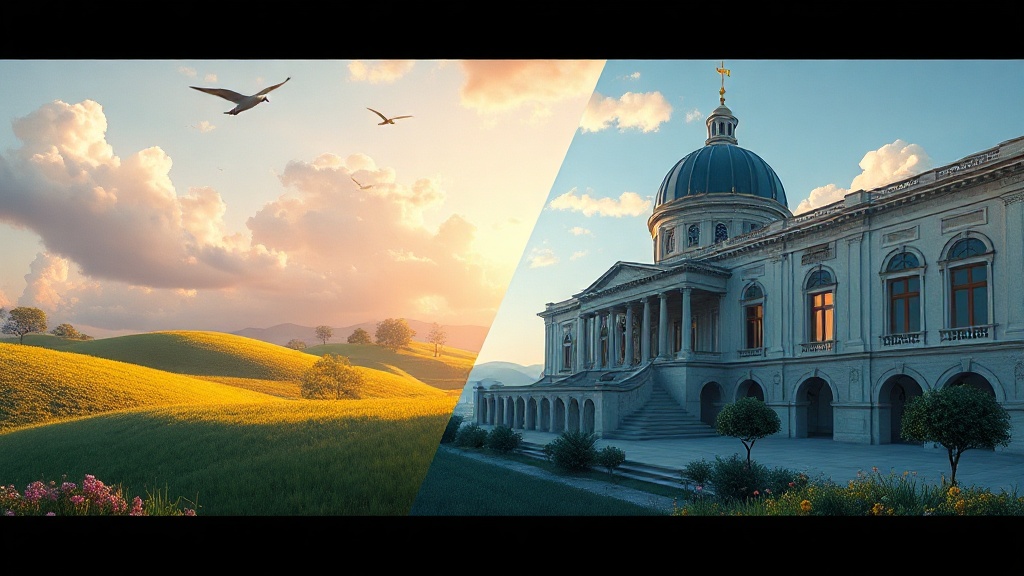
DALL-E vs Stable Diffusion remains the most significant debate for creative professionals and hobbyists looking to harness the power of generative AI in 2026. While both tools have matured into industry-standard powerhouses, they serve fundamentally different workflows, catering to those who prioritize seamless ease of use versus those who demand absolute granular control over every pixel.
Understanding the underlying philosophy of these two platforms is the first step toward integrating them into your production pipeline. DALL-E is designed as a "black box" solution where the AI does the heavy lifting of interpretation and refinement, while Stable Diffusion acts more like a modular engine, allowing you to swap components, train custom models, and manipulate the diffusion process itself.
The Ease of Use Factor: DALL-E’s Conversational Workflow
For the vast majority of users, DALL-E offers an unparalleled "prompt-to-result" experience that minimizes the friction between an idea and a finished image. By leveraging its integration with large language models, DALL-E excels at understanding nuanced, conversational prompts. You don't need to be an expert in prompt engineering; you can simply talk to the model, ask for revisions, and refine the output through natural dialogue.
Why Beginners Prefer DALL-E
The primary advantage here is the removal of technical barriers. When you use DALL-E, you are interacting with a polished, cloud-based interface that handles all the computational heavy lifting. You don't need to worry about VRAM requirements, model weights, or sampling steps. This makes it the go-to tool for marketers, social media managers, and casual creators who need high-quality assets on demand without the headache of software configuration.
However, this simplicity comes at a cost: reduced control. Because the system is designed to be user-friendly, it often imposes guardrails on style, composition, and content. You are essentially working within the "opinionated" creative space defined by the developers, which is excellent for general-purpose imagery but can feel restrictive when you have a very specific, unconventional artistic vision.
The Power User’s Playground: Stable Diffusion’s Flexibility
Stable Diffusion is the platform of choice for those who view AI generation as a craft rather than a utility. Being open-source, it has fostered an incredible ecosystem of community-driven plugins, custom models (LoRAs), and control mechanisms like ControlNet. If you need a character to stand in a very specific pose or require an architectural render to match an exact floor plan, Stable Diffusion provides the tools to make that happen.
Mastering Granular Control
Unlike DALL-E, which interprets your prompt as a whole, Stable Diffusion allows you to control the generation process at a structural level. You can use depth maps, edge detection, and pose estimation to force the AI to respect your layout. This is why professional concept artists, game developers, and character designers almost exclusively gravitate toward the Stable Diffusion ecosystem—it allows for repeatable, predictable results.
The trade-off is the learning curve. To get the most out of Stable Diffusion, you often need to understand how different samplers, CFG scales, and denoising strengths affect the final image. You will likely spend time downloading community-trained models from platforms like Civitai to achieve specific art styles, turning the process into a hobby of its own.
Feature Comparison Table
| Feature | DALL-E 3 | Stable Diffusion (Latest) |
|---|---|---|
| Primary Interface | Chat-based / Conversational | Web UI / Local Software |
| Ease of Use | Very High | Moderate to Low |
| Customization | Low (Limited Styles) | Extremely High (LoRAs, ControlNet) |
| Hardware | Cloud-only | Local or Cloud |
| Prompt Adherence | High (Semantic logic) | Variable (Requires tuning) |
| Commercial Use | Subject to platform terms | High (Depends on model license) |
The Role of Infrastructure and Cost
When choosing between these two, you must consider your hardware and budget. DALL-E is a service-based model. You pay for credits or a subscription, and the provider handles the computing power. This is cost-predictable and requires no investment in hardware. It is the "software as a service" approach that works perfectly for teams who want to avoid managing local servers.
Stable Diffusion, conversely, offers a hybrid model. If you own a high-end gaming PC with a powerful NVIDIA GPU, you can run Stable Diffusion locally for free, indefinitely. This is a massive boon for power users and privacy-conscious creators who don't want their images uploaded to a public cloud. However, if you don't have the hardware, you will have to pay for cloud-based GPU hosting, which can become expensive depending on the intensity of your usage.
Prompt Engineering: Natural Language vs. Technical Syntax
One of the most noticeable differences in 2026 is how these models process human input. DALL-E 3, in particular, is designed to be a "prompt expander." You can provide a single sentence, and the system will internally rewrite it into a detailed paragraph to ensure the AI understands the lighting, composition, and mood. This makes it very forgiving.
Stable Diffusion requires a more technical approach. Users often rely on "prompt tokens"—specific keywords that have been shown to trigger certain aesthetic styles or rendering qualities. You might find yourself listing camera settings (e.g., "85mm lens," "f/1.8," "bokeh") or lighting types (e.g., "rim lighting," "volumetric fog") to nudge the model toward a professional look. While this feels more mechanical, it allows for a level of consistency that DALL-E’s conversational approach often lacks.
Ethical Considerations and Safety Guardrails
In the current landscape, both platforms have implemented strict safety filters to prevent the generation of harmful, copyrighted, or non-consensual imagery. DALL-E is generally more restrictive, as it operates within a centralized system with corporate-mandated policies. If you attempt to generate content that skirts the edges of these policies, DALL-E will simply refuse the request.
Stable Diffusion offers more freedom, but that freedom comes with responsibility. Because many versions of Stable Diffusion are open-source and can be run locally, there is significantly less "policing" of the output. This is a double-edged sword: it allows for unrestricted creative exploration, but it also places the burden of ethical usage entirely on the user. Professional studios using Stable Diffusion often implement their own internal guidelines to ensure their workflows remain compliant with copyright law and industry standards.
How to Choose the Right Tool for Your Workflow
To decide which is better for you, look at your primary goal. If you are a content creator looking to generate blog thumbnails, social media posts, or quick concept sketches, DALL-E is almost certainly the better choice. It is faster, requires no technical setup, and provides high-quality results with minimal effort. The time saved by not having to "tinker" with settings is worth the cost of the subscription.
If you are a professional designer, illustrator, or developer, the flexibility of Stable Diffusion will eventually become a necessity. When you need to maintain consistent character designs across multiple images, or when you need to integrate AI generation into a larger pipeline (like Blender or Photoshop), the ability to control every aspect of the diffusion process is non-negotiable.
Expert Tip: The Hybrid Pipeline
Many advanced users actually use both. They use DALL-E to generate initial ideas or high-level concepts because it is excellent at understanding abstract concepts. Once they have a composition they like, they bring that image into Stable Diffusion using "Image-to-Image" (Img2Img) or ControlNet to refine the details, upscale the resolution, or apply a specific artistic texture. This hybrid approach leverages the creative intelligence of DALL-E with the surgical precision of Stable Diffusion.
Final Thoughts
The "winner" of the DALL-E vs Stable Diffusion debate in 2026 is entirely dependent on your technical appetite and your specific project requirements. DALL-E has effectively captured the market for users who value speed, simplicity, and natural language communication, making it an essential tool for the modern digital workspace. Stable Diffusion remains the undisputed king of technical creative control, serving as the backbone for artists who demand the ability to bend AI to their exact specifications.
If you are just starting your journey into generative AI, begin with DALL-E to understand the potential of the medium. Once you hit the inevitable "creative ceiling" where you find yourself wishing for more control over composition and style, that is your signal to explore the vast, powerful, and deeply rewarding world of Stable Diffusion. Both tools are evolving rapidly, and the best strategy is to remain platform-agnostic, choosing the right engine for the specific creative task at hand.
Frequently Asked Questions
Which AI model is easier for beginners to use?
DALL-E is generally considered more accessible because it operates through a conversational, chat-based interface that handles complex prompt refinement automatically. Stable Diffusion typically requires a steeper learning curve, often involving local installations or specialized web interfaces to unlock its full potential.
Can I use DALL-E or Stable Diffusion for commercial projects?
Both platforms have evolved to support commercial usage, but you should always review the specific terms of service for the platform or host you are using. Ownership rights can vary depending on whether you are using a cloud-based service or a locally hosted open-source model.
Is Stable Diffusion truly free to use?
The base models are open-source and free to run on your own hardware, but you will need a powerful GPU to do so effectively. Many third-party platforms offer hosted versions of Stable Diffusion that operate on a subscription or credit-based model, similar to DALL-E.
Our Rating

Nethmina is the founder of AI Tools Wire and an AI software developer who builds automation tools and tests new AI products hands-on every week.
📬 Get new articles by email
Subscribe for the latest AI tools, guides, and tips. No spam — unsubscribe anytime.
Related Articles
ElevenLabs vs Jasper: Can AI Voice Tools Replace Writers?
Struggling to choose between ElevenLabs vs Jasper? Learn if AI voiceover tools can actually replace writers or if they are meant to work in tandem.
Pika vs CapCut AI: Choosing the Best Video Editor for 2026
Comparing Pika vs CapCut AI to find the best tool for your workflow. Discover which AI video editor offers more features, better control, and higher quality.
Fliki vs Murf: Which AI Produces More Natural Voiceovers?
Struggling to choose? Our expert Fliki vs Murf comparison breaks down voice quality, customization, and features to help you pick the best AI voice generator.