
ElevenLabs vs Descript: Which AI Voice Tool Wins for Podcasting?
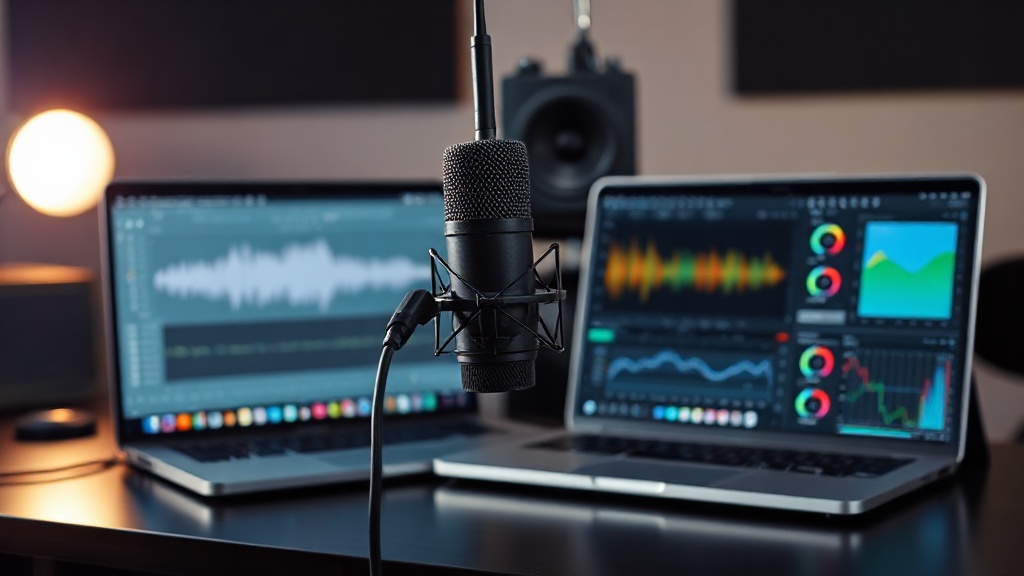
Choosing the right AI voice tool for podcasts has become a critical decision for creators looking to streamline their production while maintaining high audio quality. The debate between ElevenLabs vs Descript often boils down to whether you need a comprehensive studio-in-a-box or the world’s most advanced synthetic voice engine. While both tools leverage artificial intelligence to change how we produce audio, they serve fundamentally different stages of the podcasting lifecycle.
Descript is designed as an all-in-one platform that treats audio editing like a word document, making it an essential tool for those who want to edit podcasts quickly by cutting text. ElevenLabs, on the other hand, specializes in hyper-realistic text-to-speech and voice cloning, acting as an elite utility for generating perfect narration, ad reads, or localized content. Understanding where these tools overlap—and where they diverge—is key to building an efficient, professional-grade podcast workflow.
The Core Philosophy: Editing vs. Synthesis
Descript is a non-linear audio and video editor that revolutionized the industry by introducing text-based editing. When you upload your podcast file to Descript, it transcribes the audio into a script. If you delete a sentence from that script, Descript automatically trims the corresponding audio. This workflow is built for speed and content structure, allowing podcasters to remove "umms," "ahhs," and long pauses with the same ease as editing a blog post.
ElevenLabs is not an editor; it is a synthesis powerhouse. Its primary value proposition is the ability to generate human-like speech from text with incredible emotional range and cadence. While you cannot "edit" a recorded interview in ElevenLabs, you can create a high-fidelity synthetic version of your own voice. This allows you to generate new dialogue to fix a flubbed line or create an entire podcast episode without ever stepping into a recording booth, provided you have the right training data.
Comparing Audio Repair and Production Features
When it comes to the technical side of podcast production, Descript shines with its "Studio Sound" feature. This is a game-changer for independent podcasters who record in sub-optimal environments. It uses AI to isolate the speaker’s voice from background noise, effectively scrubbing away hums, echoes, and traffic noise. It turns amateur bedroom recordings into broadcast-quality audio, which is an invaluable feature that ElevenLabs simply does not offer.
ElevenLabs offers a different kind of utility: the "Speech-to-Speech" and "Voice Cloning" features. If you have a decent recording of yourself, you can use ElevenLabs to re-record a segment in a different tone, or even translate your podcast into multiple languages while keeping your unique voice profile intact. While Descript allows for minor "Overdub" corrections, it lacks the deep, nuanced emotional control that ElevenLabs provides for long-form narration or high-production-value scripted segments.
Key Functional Differences
| Feature | Descript | ElevenLabs |
|---|---|---|
| Primary Focus | Editing & Transcription | Voice Synthesis & Cloning |
| Audio Repair | Studio Sound (Excellent) | Not applicable |
| Text-to-Speech | Basic (Overdub) | Industry-leading (Hyper-realistic) |
| Multitrack Editing | Native | No |
| Workflow | Full production suite | Asset generation tool |
How to Choose Based on Your Workflow
If your primary pain point is the time it takes to edit your podcast, Descript is the clear winner. The ability to scan a transcript and delete filler words globally saves hours of manual scrubbing in a traditional DAW (Digital Audio Workstation). For creators who produce interview-style shows with multiple guests, Descript’s ability to label speakers and organize tracks makes it an indispensable project management tool for audio.
Conversely, if your podcast is heavily scripted—such as a documentary-style show, a fiction series, or an educational podcast—ElevenLabs is the superior choice. Its ability to read long scripts with natural intonation, pauses, and emphasis allows you to produce episodes where the narration sounds indistinguishable from a professional voice actor. It is also the go-to tool for creators looking to reach global audiences via AI-powered dubbing.
Integration: The Expert Strategy
The most advanced podcast producers often don't choose between these two; they integrate them into a unified pipeline. The typical expert workflow looks like this:
- Recording: Capture your raw audio in a high-quality environment or via remote recording software.
- Editing: Import the raw files into Descript to cut filler words, arrange the episode structure, and use Studio Sound to polish the audio quality.
- Synthesis: If you missed a line or need to record an ad read that you don't have time to do live, use ElevenLabs to generate that specific clip using a cloned version of your voice.
- Final Assembly: Export the processed audio from Descript and drop the ElevenLabs-generated clips into your timeline for a seamless, professional finish.
This hybrid approach allows you to leverage Descript’s editing efficiency while maintaining the high-fidelity vocal quality that ElevenLabs is famous for. By treating ElevenLabs as an "external voice actor" and Descript as your "production studio," you eliminate the trade-offs entirely.
Evaluating Cost and Scalability
Pricing models for both tools reflect their different use cases. Descript typically operates on a subscription model that includes transcription minutes and studio features, making it a recurring cost for your production infrastructure. Because it is a platform, the price is justified by the hours of labor saved during the editing process.
ElevenLabs operates on a credit-based system, which is ideal for creators who use AI intermittently. You pay for the amount of audio generated, which scales well if you only need the tool for specific segments of your show. However, if you plan to generate entire episodes using text-to-speech, the costs can escalate quickly. Always check the current pricing tiers on their respective websites, as both platforms frequently update their plans to offer more value for independent creators.
Pros and Cons at a Glance
Descript
- Pros: Intuitive text-based editing, powerful AI audio repair, excellent multitrack management, and built-in screen recording for video podcasts.
- Cons: Can be resource-heavy on older computers, and the AI voice cloning (Overdub) is generally less expressive than ElevenLabs.
ElevenLabs
- Pros: Unmatched voice realism, industry-leading emotion and prosody, rapid voice cloning, and sophisticated language translation features.
- Cons: No native audio editing or mixing capabilities, and it requires a separate DAW to assemble the final podcast episode.
Final Thoughts
The choice between ElevenLabs vs Descript depends entirely on whether you are looking for a production environment or a creative engine. If you are a podcaster dealing with large amounts of raw audio and frequent editing requirements, Descript is the foundation you need to save time and improve your audio quality. If you are a creator focused on high-quality narration, scripted content, or global expansion through localized audio, ElevenLabs is the gold standard for synthetic voice.
For the best results, stop viewing them as competitors and start viewing them as complementary layers of a modern audio stack. Start your journey by mastering Descript’s editing interface to handle the heavy lifting of your raw recordings, and keep an ElevenLabs subscription ready to add that extra layer of professional polish whenever your script requires a voice that is perfectly crafted, repeatable, and emotive. Start optimizing your workflow today by picking the tool that solves your most immediate bottleneck.
Frequently Asked Questions
Can I use ElevenLabs and Descript together for my podcast?
Yes, many professionals use both. You can use Descript for the primary editing and transcription, and then use ElevenLabs to generate high-quality voice-over intros, outros, or ad inserts that match your brand.
Which tool is better for fixing bad audio recordings?
Descript is significantly better for audio repair. Its 'Studio Sound' feature uses AI to remove background noise and room echo, effectively making low-quality recordings sound like they were done in a professional booth.
Is ElevenLabs better for voice cloning than Descript?
ElevenLabs generally provides more realistic, emotive, and nuanced voice cloning compared to Descript's Overdub. If your primary goal is high-fidelity synthetic voice acting, ElevenLabs is the industry leader.
Our Rating

Nethmina is the founder of AI Tools Wire and an AI software developer who builds automation tools and tests new AI products hands-on every week.
📬 Get new articles by email
Subscribe for the latest AI tools, guides, and tips. No spam — unsubscribe anytime.
Related Articles
ElevenLabs vs Jasper: Can AI Voice Tools Replace Writers?
Struggling to choose between ElevenLabs vs Jasper? Learn if AI voiceover tools can actually replace writers or if they are meant to work in tandem.
Pika vs CapCut AI: Choosing the Best Video Editor for 2026
Comparing Pika vs CapCut AI to find the best tool for your workflow. Discover which AI video editor offers more features, better control, and higher quality.
Fliki vs Murf: Which AI Produces More Natural Voiceovers?
Struggling to choose? Our expert Fliki vs Murf comparison breaks down voice quality, customization, and features to help you pick the best AI voice generator.