
Gemini vs Midjourney: Which Generates Better Visuals in 2026?
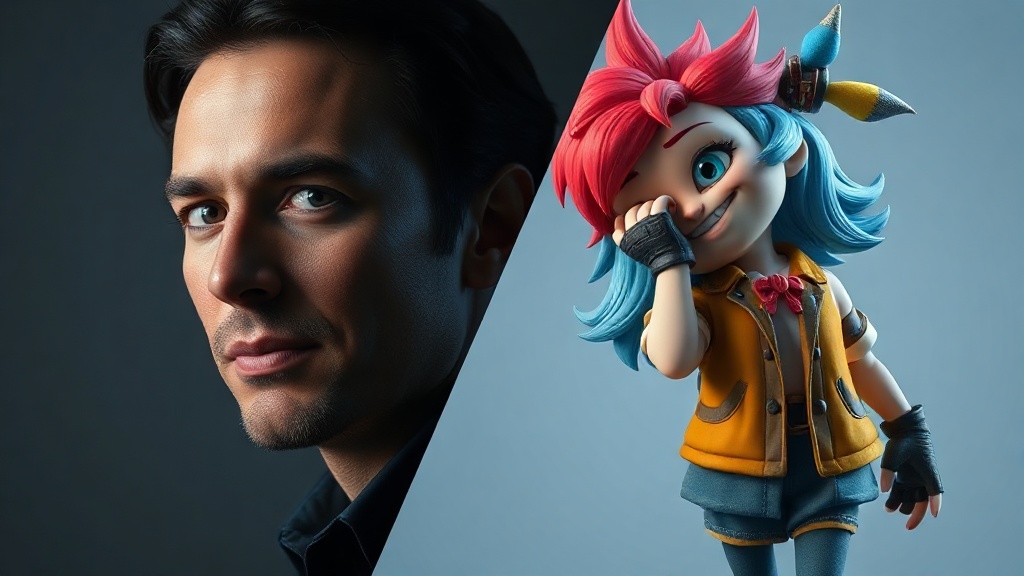
The Evolution of AI Visuals: Gemini vs Midjourney in 2026
When evaluating Gemini vs Midjourney for visual content in 2026, we are comparing two distinct philosophies of AI generation: the multimodal assistant versus the specialized artistic engine. As AI capabilities have matured, the gap between general-purpose chatbots and dedicated image generators has shifted from a question of "can it do it" to "how well does it fit into a professional workflow." While Gemini leverages the massive ecosystem of Google’s integrated tools, Midjourney continues to push the boundaries of texture, lighting, and aesthetic nuance.
Choosing between these two depends heavily on whether you prioritize creative control or operational efficiency. In 2026, Gemini acts as a jack-of-all-trades, capable of drafting copy, analyzing data, and generating images within a single chat window. Midjourney, meanwhile, remains a powerhouse for high-end visual production, offering granular control over composition that appeals to professional designers, photographers, and concept artists.
Architectural Differences in Image Generation
The core difference between these tools lies in their underlying architecture. Midjourney is built as a diffusion-based model specifically optimized for aesthetic output, meaning it prioritizes visual coherence, lighting physics, and style consistency above all else. Its training data is curated to produce results that feel "finished"—often requiring minimal post-processing. It treats the image generation process as a dedicated artistic medium where every pixel is curated for impact.
Gemini takes a different approach by treating image generation as one of many multimodal tasks. Because it is natively multimodal, it understands images, text, and code simultaneously. This allows for unique workflows where you might upload a rough sketch and ask the model to iterate on it, or pull in data from a document to influence the visual output. However, because it shares compute resources with text processing and research tasks, its "artistic" signature can sometimes feel more utilitarian or strictly literal compared to the stylized output of Midjourney.
Comparing Visual Fidelity and Photorealism
When it comes to raw photorealism, Midjourney currently holds a slight edge in handling complex lighting scenarios. Its ability to render skin textures, sub-surface scattering, and intricate environmental reflections is refined. If you are producing commercial-grade photography assets or high-fashion concepts, Midjourney’s internal engine handles the subtle interplay of light and shadow with a level of fidelity that mimics high-end camera sensors.
Gemini has made massive strides in 2026, particularly in its ability to follow complex descriptive prompts. If your goal is to generate an image that perfectly matches a specific business scenario—such as "a diverse team collaborating in a modern open-plan office with specific branding colors"—Gemini often excels. It processes the contextual requirements of a prompt better, ensuring that the elements within the image align with the logic of your request, even if the "artistic" quality is slightly more clinical than Midjourney's output.
| Feature | Gemini | Midjourney |
|---|---|---|
| Primary Use Case | Workflow & Productivity | High-End Art & Design |
| Prompt Complexity | High (Context-aware) | Very High (Technical parameters) |
| Stylistic Range | Broad/Literal | Deeply Artistic/Cinematic |
| Workflow Integration | Deep (Google Workspace) | Moderate (Discord/Web UI) |
| Learning Curve | Gentle | Steeper |
Prompt Engineering and User Experience
Midjourney has refined its interface significantly, but it still rewards users who understand its unique syntax. Using parameters like --ar for aspect ratio, --stylize for artistic flair, or --chaos for randomness allows for a level of precision that is unmatched. This "power user" experience is a significant draw for professionals who need to generate a series of images that share a consistent look and feel across an entire marketing campaign.
Gemini is built for natural language interaction. You don't need to learn a special language to get a good result; you simply talk to it like a colleague. For many users, this is a massive benefit. If you are not a professional designer, you can get 90% of the way to a great image by simply describing your vision in plain English. Gemini’s strength is in its iterative feedback loop, where you can ask it to "make the background brighter" or "change the subject's clothing to blue" without starting the prompt over.
Workflow Integration and Ecosystem Utility
The real-world utility of these tools is often defined by where they live. Gemini is seamlessly woven into the Google ecosystem. If you are using Google Docs, Slides, or Gmail, the ability to generate imagery without leaving your document is a game-changer for productivity. It saves time, reduces context switching, and keeps your assets within a manageable file structure.
Midjourney, while moving toward a more robust web-based application, remains largely a standalone creative tool. It doesn't natively integrate with your word processor or spreadsheet software. However, for creative agencies, it acts as a central hub for mood boarding and asset creation. The ability to "pan," "zoom," and "vary" regions of an image within the Midjourney interface provides a creative sandbox that is far more powerful than the linear chat-based approach of Gemini.
Best Use Cases for Each Tool
To decide which tool is right for you, consider the specific output you need on a daily basis:
- Choose Gemini if: You need rapid, context-aware imagery for presentations, blog posts, or internal communications. It is ideal for teams already embedded in Google Workspace who value speed and ease of use over extreme stylistic control.
- Choose Midjourney if: You are a creative professional, a photographer, or a designer who needs high-fidelity, visually stunning imagery. It is the better choice for projects where the aesthetic quality, lighting, and composition are the primary drivers of success.
Pro-Tip: The Hybrid Workflow
Many successful studios in 2026 are using both. They use Gemini to brainstorm concepts and refine the narrative or descriptive text of their prompt, then feed those optimized descriptions into Midjourney to generate the final, high-fidelity visual assets. This leverages the "brain" of Gemini with the "eyes" of Midjourney.
Limitations and Ethical Considerations
Both tools are subject to the challenges of AI generation, including occasional hallucinations—where the AI might misinterpret a prompt or render an object with impossible geometry. Midjourney has become much better at handling human anatomy, but it can still struggle with complex text rendering. Gemini, conversely, is heavily guarded by safety filters. While this makes it safer for corporate environments, it can sometimes be over-restrictive, refusing to generate images that it perceives as sensitive, even in a creative context.
Furthermore, copyright and commercial usage remain hot topics. Both platforms have updated their terms of service to provide clearer guidance for professional users. Always ensure you are using the appropriate subscription tier, as most platforms reserve commercial rights for their paid, enterprise, or pro-level members. If your organization has strict compliance requirements, Gemini’s integration with Google’s enterprise security layer often makes it the preferred choice for legal departments.
Final Thoughts
The choice between Gemini and Midjourney in 2026 is no longer about which is "smarter"—it is about what your workflow demands. Gemini is a versatile productivity companion that excels at integrating visual generation into your daily documentation and communication tasks. It is the ultimate tool for the modern office worker who needs to communicate ideas quickly and effectively. Midjourney, however, remains the gold standard for artistic expression, offering unparalleled control for those who view AI as a primary creative instrument rather than a supplemental task-doer.
For most creative professionals, the answer isn't choosing one over the other, but understanding the unique strengths of each. If you are looking to elevate your visual content, start by experimenting with both tools on a single project. Use Gemini to streamline the ideation phase and Midjourney to polish the final output. By mastering the synergy between these two platforms, you can build a visual pipeline that is both fast and incredibly high-quality. Explore your options today and see how these tools can transform your creative output.
Frequently Asked Questions
Can Gemini compete with Midjourney for professional graphic design?
Gemini is excellent for rapid ideation and integrated text-heavy visuals, but Midjourney remains the industry standard for high-fidelity artistic control and complex textures.
Which tool is better for beginners who have never used prompt engineering?
Gemini’s chat-based interface is generally more intuitive for beginners, whereas Midjourney requires learning specific syntax parameters to achieve consistent, high-quality results.
Do both tools allow for commercial use of generated images?
Both platforms offer commercial usage rights for paid subscribers, though you should always verify the current terms of service as they evolve to reflect changing legal standards.
Our Rating

Nethmina is the founder of AI Tools Wire and an AI software developer who builds automation tools and tests new AI products hands-on every week.
📬 Get new articles by email
Subscribe for the latest AI tools, guides, and tips. No spam — unsubscribe anytime.
Related Articles
ElevenLabs vs Jasper: Can AI Voice Tools Replace Writers?
Struggling to choose between ElevenLabs vs Jasper? Learn if AI voiceover tools can actually replace writers or if they are meant to work in tandem.
Pika vs CapCut AI: Choosing the Best Video Editor for 2026
Comparing Pika vs CapCut AI to find the best tool for your workflow. Discover which AI video editor offers more features, better control, and higher quality.
Fliki vs Murf: Which AI Produces More Natural Voiceovers?
Struggling to choose? Our expert Fliki vs Murf comparison breaks down voice quality, customization, and features to help you pick the best AI voice generator.