
Generate Ad Copy with AI: 7 Proven Tactics for 2026
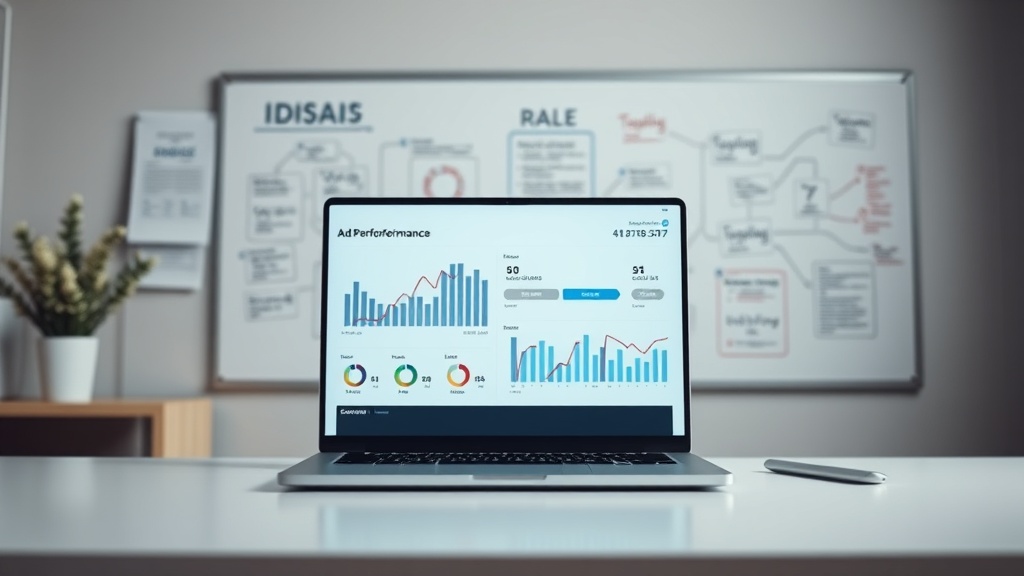
Learning how to generate ad copy with AI that drives clicks in 2026 requires shifting your perspective from "AI as a writer" to "AI as a strategic testing partner." As digital advertising becomes increasingly saturated, the winners are no longer just those with the highest budget, but those who can most effectively leverage generative models to iterate on messaging at the speed of the algorithm.
The modern AI-driven advertising stack goes beyond simple text generation. It involves a sophisticated loop of data ingestion, psychological framing, and rapid A/B testing that allows you to uncover messaging nuances that would take a human team weeks to identify. By following this guide, you will learn to harness these tools to stop the scroll and turn impressions into measurable conversions.
Understanding the Role of Context in AI Prompting
The most common failure point for marketers using AI to generate ad copy is providing vague instructions. If you ask a model to "write a Facebook ad for running shoes," you will receive generic, uninspired copy that gets ignored. To drive clicks, you must feed the AI the same context you would give a high-priced agency copywriter.
The Context Framework
To get high-converting output, your prompts should consistently include four specific data points:
- The Target Persona: Define exactly who is reading the ad (e.g., "A tech-savvy remote worker struggling with productivity").
- The Pain Point: What is the one specific problem they are trying to solve?
- The Unique Value Proposition (UVP): Why is your solution different from the competitors?
- The Desired Outcome: Is the goal a direct purchase, a newsletter sign-up, or a demo request?
By providing this context, you shift the AI from generating "creative text" to "persuasive communication." In 2026, the best ad copy isn't just clever; it is surgically aligned with the user’s immediate intent. When the AI understands the "why" behind the click, the tone shifts from promotional to helpful, which is the secret ingredient to higher engagement rates.
Iterative Testing and The Power of Variations
One of the greatest advantages of using AI is the ability to generate hundreds of variations of a single concept in minutes. However, the goal is not to have a hundred ads; the goal is to have a hundred informed experiments. You should use AI to explore different psychological angles for the same product.
The Three-Angle Approach
When generating your copy, instruct your AI tool to create variations based on distinct psychological triggers:
- The Fear of Missing Out (FOMO) Angle: Focus on scarcity, limited-time offers, and the cost of inaction.
- The Benefit-Driven Angle: Focus entirely on how the user's life improves after using the product.
- The Authority/Social Proof Angle: Focus on industry accolades, user testimonials, or expert endorsements.
By creating these distinct buckets, you can feed them into your ad platform’s machine learning engine. The platform will then determine which psychological angle resonates most with which segment of your audience, effectively doing the A/B testing for you. This approach reduces the reliance on guesswork and replaces it with data-backed creative strategy.
Comparing Manual vs. AI-Assisted Copywriting
The transition to AI-assisted workflows is not about replacing human creativity but about augmenting efficiency. The table below outlines how the two approaches compare across critical performance metrics.
| Metric | Manual Copywriting | AI-Assisted Copywriting |
|---|---|---|
| Time to Market | Days | Minutes |
| Volume of Variants | Low (3-5) | High (50+) |
| Brand Consistency | High (Human oversight) | Medium (Requires prompt tuning) |
| Data Integration | Manual analysis | Real-time optimization |
| Psychological Depth | Expert-level | Scalable exploration |
As shown in the comparison, the primary trade-off is brand consistency. While AI is fast, it requires a human editor to ensure that the output doesn't drift into generic territory. The most successful teams in 2026 use AI to generate the volume and then use human editors to curate the best 10% that aligns perfectly with the brand voice.
Leveraging Historical Data for Better Prompts
You likely have access to years of campaign performance data. This is your most valuable asset when training your AI models. Rather than starting from scratch, use your top-performing historical ads as the "ground truth" for your AI.
How to Feed Data to Your AI
- Export your best-performing ads: Identify the top 5% of your ads by Click-Through Rate (CTR) and Conversion Rate.
- Analyze the commonalities: Are they short? Do they use questions? Do they focus on specific features?
- Create a 'Style Guide' Prompt: Paste these ads into your AI tool and say: "Analyze these ads for tone, sentence length, and structure. Use these patterns to write a new ad for [New Product] targeting [New Audience]."
This process effectively trains the AI on your brand’s "DNA." Over time, the AI will learn the specific cadence of your successful ads, making each subsequent batch of copy more refined and effective. This is how you move from basic generation to high-performance automation.
The Human-in-the-Loop Workflow
Even in 2026, the "set it and forget it" approach to AI ad copy is a recipe for wasted ad spend. The most effective strategy is a "Human-in-the-Loop" (HITL) workflow. This ensures that the AI’s output is checked for accuracy, compliance, and emotional resonance before it ever hits the live ad auction.
The HITL Checklist
Before you push an AI-generated ad to your dashboard, perform these three checks:
- Fact Check: Does the AI claim a discount or feature that doesn't exist? AI models can hallucinate specific details.
- Compliance Check: Does the copy violate any platform guidelines (e.g., prohibited claims, misleading language)?
- The "So What?" Test: Read the ad as a customer. If your first thought is "So what?", the ad needs a stronger hook or a more direct benefit statement.
Human editors act as the final quality control layer. They bring the nuance, empathy, and strategic context that AI lacks. By combining the speed of AI with the critical thinking of a human marketer, you create a workflow that is both efficient and highly effective.
Integrating AI with Ad Platform Algorithms
Modern ad platforms like Meta, Google, and LinkedIn are becoming increasingly automated. They use their own internal AI to match your ads with the right users. When you use generative AI to create your copy, you are essentially "feeding the machine" with better data.
Optimizing for Platform Algorithms
- Use Keywords Naturally: If you are running Google Search ads, ensure the AI includes your target keywords in the headlines.
- Focus on Headlines: The platform’s algorithm tests headlines more aggressively than body text. Spend 70% of your AI prompting time on perfecting 3-5 punchy headline variations.
- Test Dynamic Creative: Instead of hard-coding one ad, use the AI to generate multiple components (headlines, descriptions, call-to-actions) and let the platform’s dynamic creative tools assemble them for different users.
The goal is to provide the platform with enough high-quality, diverse content that its internal AI has the best possible "raw material" to work with. When your copy is varied and relevant, the platform's algorithm rewards you with lower costs per click and higher conversion rates.
Advanced Tactics for 2026 and Beyond
As we move deeper into 2026, the barrier to entry for generating "good" copy has dropped to zero. To stay ahead, you must move toward "hyper-personalization." This involves using AI to generate copy that speaks to micro-segments of your audience, rather than a broad, generic demographic.
The Micro-Segmentation Strategy
Instead of creating one ad for "all homeowners," use AI to generate five different versions:
- One for homeowners interested in sustainability.
- One for homeowners focused on resale value.
- One for homeowners looking for cost-saving solutions.
- One for homeowners concerned with home security.
- One for homeowners who value aesthetic design.
By tailoring the copy to these specific values, you significantly increase the relevance of your ad. This level of granularity was previously impossible due to the time required for copywriting. Now, with AI, it is a standard operating procedure for high-performing marketing teams.
Final Thoughts
Generating ad copy with AI is not a shortcut; it is a fundamental shift in how we approach creative strategy. By treating AI as a high-speed engine for iteration and using human expertise to curate and steer that engine, you can maintain high performance while out-pacing competitors who are still relying on traditional, slower methods.
The tools will continue to evolve, but the core principles remain the same: deep context, rigorous testing, and a constant focus on the user's intent. Start by auditing your current top-performing ads, feed that data into your preferred AI model, and begin your journey toward a more data-driven, efficient, and successful advertising strategy today.
Frequently Asked Questions
How can I ensure AI-generated ad copy doesn't sound robotic?
The key is to use 'persona-based prompting' where you define the brand voice, tone, and specific audience pain points. Always inject a layer of human editing to review the output for idioms, brand-specific jargon, and emotional resonance.
Does AI ad copy actually perform better than human-written copy?
AI excels at rapid iteration and testing multiple variations at scale. While human writers provide the strategic direction and creative spark, AI acts as a force multiplier that helps identify which specific hooks or emotional triggers resonate best with your target segments.
What is the best way to train an AI model on my brand voice?
Upload your top-performing historical ad copy as a reference document or 'style guide' within your AI tool's context window. This teaches the model the specific vocabulary, sentence structure, and value propositions that have proven successful for your brand in the past.

Nethmina is the founder of AI Tools Wire and an AI software developer who builds automation tools and tests new AI products hands-on every week.
📬 Get new articles by email
Subscribe for the latest AI tools, guides, and tips. No spam — unsubscribe anytime.
Related Articles

How to Write Newsletters with AI That Subscribers Love (2026)
Master how to write newsletters with AI that subscribers love in 2026. Learn advanced prompting, personalization strategies, and human-in-the-loop workflows.

How to Make Animated Videos with AI in 2026: A Step-by-Step Guide
Learn how to make animated videos with AI in 2026 using the latest generative tools. Follow our expert guide to streamline your production workflow today.

Compose Original Music with AI in 2026: A Beginner’s Guide
Learn how to compose original music with AI in 2026. From prompt engineering to professional production, master these tools to create high-quality audio today.