
Grok vs Synthesia: 2026 Guide for Interactive Content Success
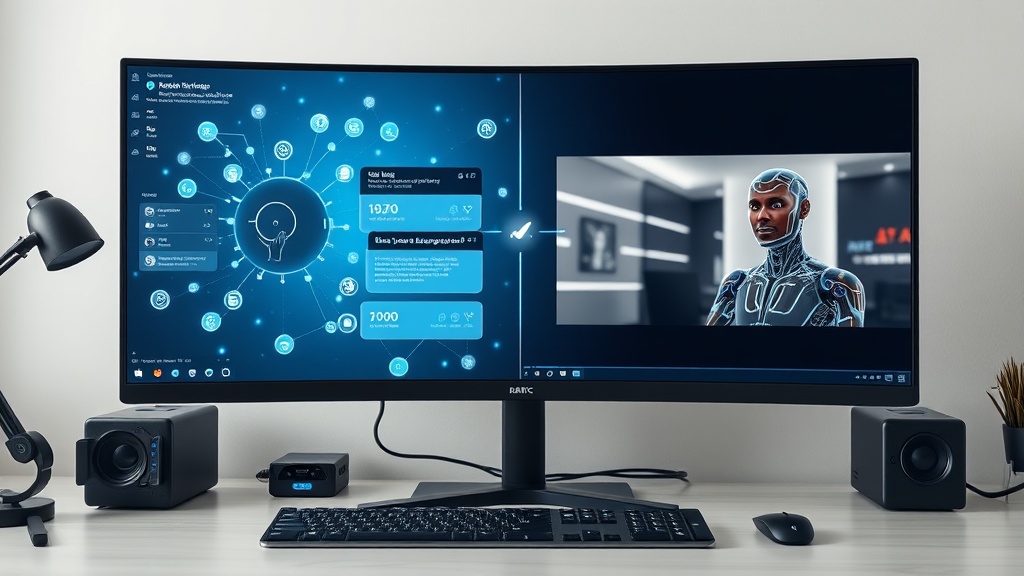
Choosing between Grok vs Synthesia for interactive content requires a clear understanding of your specific engagement goals, as these tools operate in fundamentally different domains of the AI landscape. While both represent the cutting edge of synthetic media and machine learning, one excels in the realm of conversational intelligence, while the other dominates the field of visual storytelling and automated presentation. Understanding which tool aligns with your content strategy is the difference between a static experience and a truly immersive user journey.
Understanding the Core Philosophy of Grok
Grok, developed by xAI, is built on the foundation of a real-time, conversational large language model. Its primary strength lies in its "personality" and its ability to access live information, making it an ideal candidate for interactive content that requires up-to-the-minute data or nuanced, human-like dialogue. Unlike traditional chatbots that rely on rigid decision trees, Grok thrives on ambiguity, allowing users to ask complex questions and receive responses that feel contextually aware and distinctively opinionated.
From a content perspective, Grok functions as an active participant rather than a passive media player. When you integrate this type of technology into your website or application, you are moving away from "read-only" content toward a "dialogue-first" approach. This is particularly effective for brands that prioritize transparency, thought leadership, and real-time community interaction. It is less about delivering a polished script and more about facilitating a dynamic exchange of ideas that keeps the user engaged through curiosity.
The Visual Power of Synthesia
Synthesia, conversely, is the industry standard for AI-driven video production, focusing on the creation of hyper-realistic digital avatars that deliver messages with human-like prosody and body language. If your content strategy relies on visual authority—such as training modules, product demonstrations, or personalized outreach—Synthesia provides a level of polish that text-based models simply cannot replicate. It solves the "blank screen" problem by providing a face and a voice to your brand's digital presence.
The core value proposition here is scalability. Instead of hiring a production crew, renting a studio, and coordinating schedules for every minor content update, you can generate professional-grade video content in minutes. For interactive content, this means you can create a library of consistent, high-quality video assets that guide users through your interface, acting as a virtual concierge that is always available and perfectly consistent in tone and delivery.
Comparing Interactive Capabilities
When evaluating Grok vs Synthesia for interactivity, it is vital to distinguish between "conversational interactivity" and "multimedia engagement." Grok excels at the former; it is designed to react to user input, pivot based on context, and provide personalized answers. This makes it an incredibly powerful tool for lead qualification or personalized recommendation engines where the user's specific input determines the path of the conversation.
Synthesia offers a different form of interactivity: "experiential engagement." While the video itself is pre-rendered, the way it is deployed can be highly interactive. For instance, you can trigger specific Synthesia-generated video segments based on user clicks or form submissions. This allows for a "choose your own adventure" style of content, where the user feels guided by a personal tutor or host, even though the content is automated.
| Feature | Grok (xAI) | Synthesia |
|---|---|---|
| Primary Output | Text / Conversational | AI Video / Avatars |
| User Interaction | Real-time, open-ended | Conditional, triggered sequences |
| Best Use Case | Support, Q&A, Research | Onboarding, Training, Marketing |
| Information Source | Live web data | Pre-scripted data |
| Deployment Speed | Instant | Requires rendering time |
Implementation Strategies for Marketing
To maximize the effectiveness of these tools, you should consider a hybrid approach. Many high-authority sites use Synthesia to create a "Welcome and Orientation" video that sets the context for the user experience. By having a digital avatar introduce the value proposition, you establish trust and humanize your brand instantly. Once the user is comfortable, you can transition them to a Grok-powered chat interface to handle specific, granular questions about pricing, features, or technical specs.
A common pitfall is attempting to use one tool to solve the other's problem. Do not try to force a conversational AI to act as a video presenter, and do not try to use video avatars for tasks that require live, real-time data retrieval. The "expert" way to implement these is to map your user journey: use Synthesia for the "show" (demonstrations and storytelling) and Grok for the "tell" (answering questions and navigating data).
Pros and Cons of Each Platform
When you weigh the pros and cons, the choice often comes down to the nature of your content pipeline. Grok is exceptionally lightweight in terms of production cost; you don't need scripts or visual assets to get started. However, the lack of visual control means you are at the mercy of the model's tone. The pro is agility; the con is the potential for "hallucination" or off-brand responses that require careful guardrails.
Synthesia, on the other hand, provides total control over the output. You know exactly what the avatar will say, how it will look, and how it will sound. This is a massive "pro" for corporate compliance and brand consistency. The downside is the production cycle; even though it is fast, it is not "live." You cannot have a spontaneous, unscripted conversation with an avatar in the same way you can with a text-based LLM, which limits its utility in highly unpredictable, free-form environments.
Step-by-Step: Integrating AI into Your Workflow
If you are ready to deploy these tools, follow this structured workflow to ensure a seamless integration:
- Define the User Persona: Determine if your audience needs a friendly, visual guide (Synthesia) or a sharp, knowledgeable consultant (Grok).
- Map the Touchpoints: Identify where in your funnel users drop off. If they drop off during complex explanations, use Synthesia. If they drop off because they have unanswered questions, use Grok.
- Create the Script/Prompt Library: For Synthesia, write scripts that are concise and benefit-driven. For Grok, develop a comprehensive "System Prompt" that defines the brand voice and boundaries.
- Test for Nuance: Run A/B tests on your landing pages. Does a video lead to more sign-ups, or does a chat window encourage more time-on-page?
- Monitor and Refine: Use analytics to see which questions your users are asking the chat model most frequently, and turn those answers into new, high-quality Synthesia videos.
Expert Tips for High-Authority Content
One non-obvious insight for using these tools is the concept of "Cognitive Load Management." Research shows that users process information differently when they see a human face (even a synthetic one) versus reading text. Use Synthesia when you need to teach a concept that requires empathy or trust—like a sensitive company policy or a complex product setup. Save Grok for high-density information retrieval, such as technical documentation or deep-dive research.
Additionally, always remember that accessibility is a key component of SEO. Synthesia allows you to easily generate localized versions of your content in dozens of languages, which is a massive win for global SEO. Meanwhile, Grok can summarize long-form content for users who prefer concise bullet points, effectively serving different user intent types within the same session. By leveraging both, you cater to both the "skimmers" and the "deep-divers."
Final Thoughts
The debate between Grok vs Synthesia is not about finding a single "winner," but about identifying which tool solves the specific friction points in your user journey. If you need to scale visual authority and human-like presence, Synthesia is the clear leader. If your goal is to provide dynamic, intelligent, and real-time interaction that mimics a human consultant, Grok is the superior choice. The most successful content strategies of 2026 will be those that integrate both to create a holistic, multi-modal experience. Start by auditing your current engagement metrics, identify your most significant content gaps, and deploy the AI tool that directly addresses those specific needs. Ready to elevate your content? Begin by testing one of these tools on a single landing page today to see the impact on your conversion rates.
Frequently Asked Questions
Can Grok generate video content like Synthesia?
No, Grok is primarily a large language model designed for real-time text-based interaction and information retrieval, whereas Synthesia is a dedicated platform for generating AI avatar-led video presentations.
Which tool is better for customer support automation?
Grok is superior for conversational support due to its ability to handle dynamic, open-ended queries, while Synthesia is better for delivering static, pre-recorded video tutorials or onboarding guides.
Can I combine both tools for a better user experience?
Absolutely; many companies use Synthesia to create high-quality, welcoming video introductions and use Grok-like LLMs to handle the subsequent interactive Q&A portion of the user journey.
Our Rating

Nethmina is the founder of AI Tools Wire and an AI software developer who builds automation tools and tests new AI products hands-on every week.
📬 Get new articles by email
Subscribe for the latest AI tools, guides, and tips. No spam — unsubscribe anytime.
Related Articles
ElevenLabs vs Jasper: Can AI Voice Tools Replace Writers?
Struggling to choose between ElevenLabs vs Jasper? Learn if AI voiceover tools can actually replace writers or if they are meant to work in tandem.
Pika vs CapCut AI: Choosing the Best Video Editor for 2026
Comparing Pika vs CapCut AI to find the best tool for your workflow. Discover which AI video editor offers more features, better control, and higher quality.
Fliki vs Murf: Which AI Produces More Natural Voiceovers?
Struggling to choose? Our expert Fliki vs Murf comparison breaks down voice quality, customization, and features to help you pick the best AI voice generator.