
Lumen5 vs Descript: Which AI Video Tool Wins for Marketing?
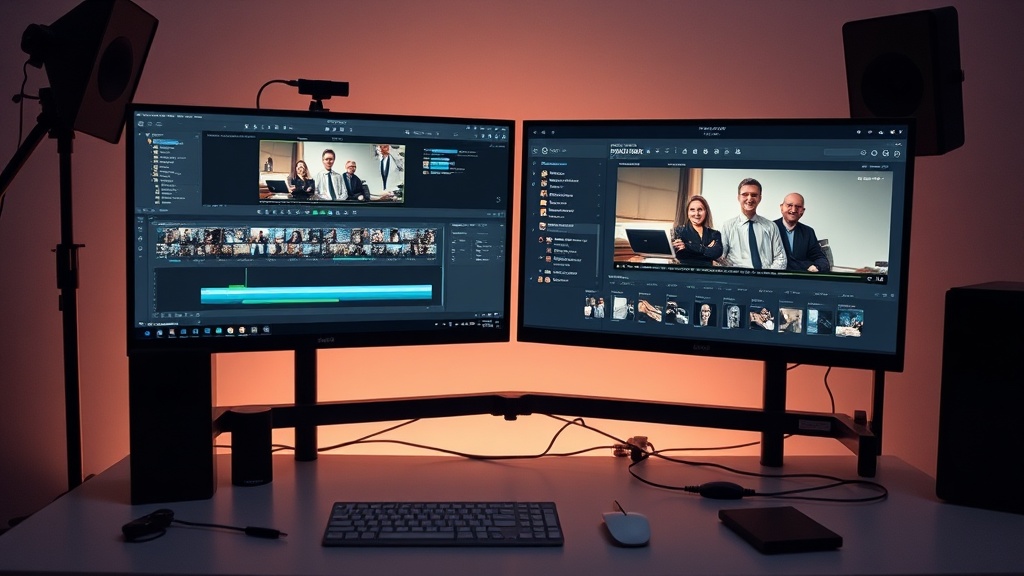
Choosing between Lumen5 vs Descript is a pivotal decision for any modern marketing team looking to scale their video production without ballooning their budget. While both platforms leverage the power of artificial intelligence to streamline creation, they fundamentally solve different problems for content creators and marketers.
Lumen5 is a specialized tool designed to transform existing content—like blog posts, whitepapers, or RSS feeds—into engaging, slide-based social media videos. It is the ultimate "text-to-video" engine for teams that need to repurpose written content quickly. Conversely, Descript is a powerful, text-based audio and video editor that treats your footage like a word processor. It is built for creators who want granular control over their narrative, interviews, and long-form video projects.
Understanding the Core Philosophy: Automated vs. Manual Editing
The primary difference between these two tools lies in their approach to the creative process. Lumen5 follows an automated, template-driven philosophy. You provide the text, and the AI suggests media, layouts, and pacing. It is designed to remove the friction of "starting from scratch," making it ideal for social media managers who need to produce a high volume of short, punchy videos that don't require complex editing.
Descript, however, operates on a document-based editing paradigm. When you upload a video or audio file, Descript transcribes it instantly. You edit the video by deleting text in the transcript, and the underlying media follows suit. This approach is revolutionary for editors who spend hours listening to raw footage. If you are producing webinars, podcasts, or deep-dive product explainers, Descript offers the precision that automated tools like Lumen5 simply aren't designed to provide.
Lumen5: The Power of Text-to-Video Automation
Lumen5 excels in the "repurposing" category of content marketing. Its workflow is built around efficiency and speed. By pasting a URL or a block of text into the platform, the AI analyzes the content, summarizes the key points, and automatically creates a storyboard with relevant stock photos and video clips.
Key Strengths for Marketers
- Speed to Publication: You can turn a 1,500-word blog post into a 60-second video in under ten minutes.
- Brand Consistency: With its "Brand Kit" feature, you can lock in your brand colors, fonts, and watermarks to ensure every video looks like it belongs to your company.
- Stock Library Access: Lumen5 provides direct access to a massive library of high-quality stock footage, music, and images, eliminating the need to search third-party sites.
This tool is specifically optimized for platforms like LinkedIn, Instagram, and Facebook, where short-form, informative video content thrives. It is less about "filmmaking" and more about "content democratization"—making it easy for non-designers to produce professional assets.
Descript: Precision Editing for Storytellers
Descript is the industry standard for creators who need to edit video by editing text. Its "Studio Sound" feature, which uses AI to remove background noise and make amateur microphone recordings sound like they were recorded in a professional studio, is a game-changer for marketing teams without access to high-end audio equipment.
Advanced Features for Pro-Level Content
- Overdub: This allows you to generate high-quality AI voices that sound exactly like you, letting you fix misspoken words in a recording without re-recording the entire clip.
- Filler Word Removal: With one click, the software detects and removes "ums," "uhs," and long pauses, cleaning up raw footage in seconds.
- Multitrack Editing: Unlike Lumen5, Descript allows for complex, multi-layered video editing, making it suitable for high-production-value marketing campaigns.
If your marketing strategy involves interviews, podcasts, or video tutorials where the narrative needs to be tight and impactful, Descript is the superior choice. It offers the depth of professional software like Adobe Premiere Pro but with a significantly shallower learning curve.
Feature Comparison Table
| Feature | Lumen5 | Descript |
|---|---|---|
| Primary Workflow | Text/URL to Video | Transcription-based editing |
| Ideal For | Social media repurposing | Podcasts, webinars, interviews |
| Learning Curve | Extremely low | Moderate |
| Stock Assets | Extensive built-in library | Limited (Focus on user footage) |
| Audio Editing | Basic background music | Advanced AI noise removal/Overdub |
| Customization | Template-based | High/Manual control |
The Workflow Experience: Which Fits Your Team?
For a social media manager tasked with producing five videos a week, Lumen5 is the clear winner. The automated nature of the tool means you aren't spending time trimming clips or matching audio to visuals—the AI handles the heavy lifting. You can manage a massive content calendar with minimal effort, ensuring that your blog content gets a second life on social platforms.
However, if your team is producing "thought leadership" content, such as CEO interviews or detailed product demonstrations, Lumen5 will feel too restrictive. In these scenarios, you need to cut out specific phrases, add B-roll, and adjust the pacing for maximum engagement. Descript allows you to do this by simply editing a document, which is far more intuitive than scrubbing through a traditional timeline.
Pricing and Scalability Considerations
Most AI video tools, including both Lumen5 and Descript, offer a tiered pricing structure that typically starts with a free or low-cost entry plan. Lumen5’s pricing is generally structured around the volume of video production and the resolution quality required for your brand. It is an investment in "output volume."
Descript’s pricing often scales based on the amount of transcription time and advanced AI features (like Studio Sound or Overdub usage). Because Descript is a more robust editor, it is often seen as a replacement for traditional NLE (Non-Linear Editor) software. When calculating the ROI, consider that Descript might save your team money on external video editors or expensive audio production services.
Expert Tips for Choosing the Right Tool
If you are still on the fence, consider these three questions to clarify your needs:
- Where does your content start? If you are a blog-first company, Lumen5 is your best friend. If you are a video-first company that needs to clean up raw footage, go with Descript.
- What is the desired production value? For high-frequency, "snackable" content, choose the automation of Lumen5. For high-impact, polished video assets, choose the editing precision of Descript.
- Who is the user? If you need to empower your interns or non-technical staff to create videos, Lumen5 is safer and easier to learn. If you have a dedicated content creator on staff, they will likely prefer the power and flexibility of Descript.
A common pitfall is trying to use Lumen5 for long-form, narrative-driven content, which leads to a "slideshow" look that can feel impersonal. Conversely, trying to use Descript for quick social media repurposing can be overkill if you don't already have the raw video footage to work with.
Final Thoughts
The decision between Lumen5 and Descript is not about which tool is objectively "better," but rather which tool aligns with your specific marketing objectives. Lumen5 is an incredible engine for scale, perfect for teams that need to turn text into visual assets at record speed. It simplifies the design process so that you can focus on the message, not the pixels.
Descript is the superior choice for teams that prioritize high-quality storytelling and need a powerful, intuitive editor that cuts through the noise of traditional video software. Whether you choose the automation of Lumen5 or the precision of Descript, both platforms represent the future of efficient marketing production. Start by identifying your team's biggest bottleneck: is it the lack of video assets or the time spent on editing? Solve that, and you've found your winner. If you're ready to scale, consider starting with a trial on both to see which interface feels more natural to your daily workflow.
Frequently Asked Questions
Is Lumen5 better for beginners than Descript?
Yes, Lumen5 is generally more accessible for beginners who want to turn text or blog posts into social media videos quickly. Descript requires a slightly steeper learning curve because it functions more like a traditional non-linear editor.
Can I use Descript for social media clips?
Absolutely, Descript is excellent for creating social media clips, especially if you are repurposing long-form podcast or interview footage. Its text-based editing makes trimming viral clips faster than almost any other tool.
Do both tools offer AI voiceover features?
Yes, both platforms provide high-quality AI voiceover capabilities, though they serve different use cases. Descript is known for its hyper-realistic 'Overdub' feature, while Lumen5 focuses on automated narration for slide-style videos.
Our Rating

Nethmina is the founder of AI Tools Wire and an AI software developer who builds automation tools and tests new AI products hands-on every week.
📬 Get new articles by email
Subscribe for the latest AI tools, guides, and tips. No spam — unsubscribe anytime.
Related Articles
Murf vs Pictory: Best AI Tools for Voiceovers and Video in 2026
Choosing between Murf vs Pictory? We compare these top AI tools to help you decide which is best for professional voiceovers and automated video repurposing.
HeyGen vs Fliki: Which AI Video Tool Wins in 2026?
Comparing HeyGen vs Fliki to determine the best AI video platform for your needs. Discover which tool excels in avatars, content repurposing, and efficiency.

CapCut AI vs Synthesia: Which Video Tool Wins in 2026?
Comparing CapCut AI vs Synthesia to help you choose the right video editor for your needs. Discover which tool excels at creative editing versus AI avatars.