
Stable Diffusion vs Leonardo AI: Which Offers More Control?
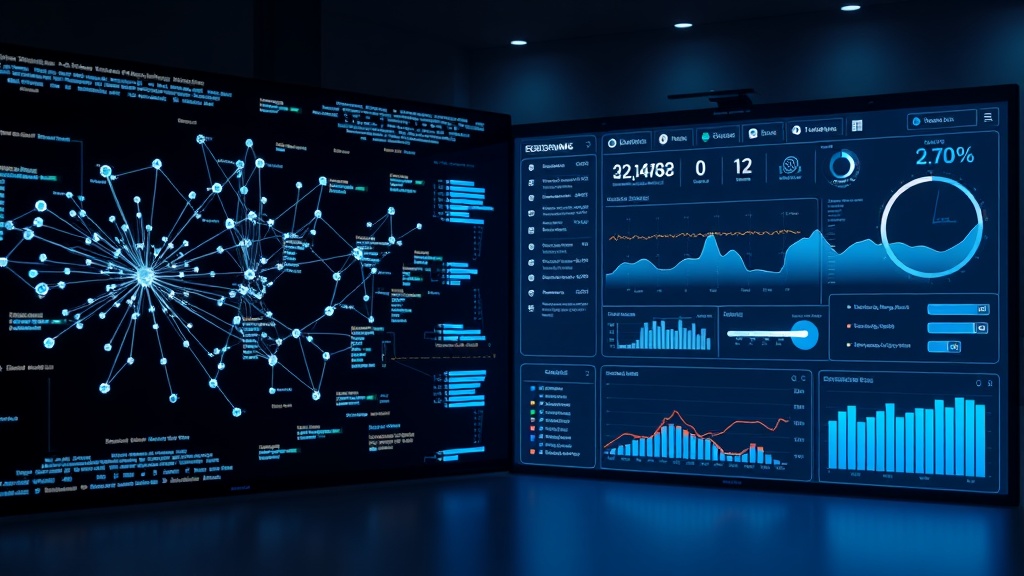
Choosing between Stable Diffusion vs Leonardo AI is a pivotal decision for digital creators, as both platforms define the current landscape of generative art but serve fundamentally different workflows. Stable Diffusion is the industry standard for open-source flexibility, offering deep, granular control that appeals to developers and power users who want to host their own models. Leonardo AI, by contrast, sits atop a sophisticated layer of abstraction, providing a refined, user-friendly interface that brings professional-grade control to a broader audience without the need for high-end local hardware.
Understanding the distinction between these two isn't just about features; it’s about your tolerance for technical configuration versus your need for rapid, iterative design. Whether you are building an intricate pipeline for game asset generation or simply looking to refine your digital art portfolio, the trade-off usually comes down to "local control vs. managed convenience."
The Architecture of Control: Local vs. Cloud
At its core, Stable Diffusion is a weight-based model framework that you can download and run on your local machine. This architecture is the primary driver of its "ultimate control" reputation. Because the model lives on your hardware, you aren't restricted by the safety filters, API usage limits, or interface constraints imposed by third-party cloud services. You can swap models, merge checkpoints, and modify the underlying code of your UI—such as Automatic1111 or ComfyUI—to suit your specific project requirements.
Leonardo AI operates as a managed service, meaning you access the power of its custom-tuned models through a web browser. While this might sound like it limits control, the platform’s strength lies in its specialized toolset. Leonardo has built an ecosystem that integrates complex workflows—like in-painting, out-painting, and image-to-image prompting—directly into an intuitive dashboard. You sacrifice the ability to manipulate the raw Python scripts, but you gain a highly optimized environment where features like "Image Guidance" are pre-calibrated to deliver consistent, professional results.
Workflow Efficiency and User Experience
For many artists, the time spent setting up an environment is time taken away from creating. Stable Diffusion, particularly when using advanced interfaces like ComfyUI, offers a node-based workflow that is incredibly powerful but has a steep learning curve. You are essentially building a custom image-generation machine, connecting different "nodes" to control every variable, from seed variation to latent space manipulation. This is the gold standard for technical control, but it requires significant troubleshooting and hardware maintenance.
Leonardo AI excels in "flow." Its interface is designed to keep you in the creative zone, providing sliders and toggle-based controls for things that would take hours to configure in a local Stable Diffusion environment. For instance, their "Canvas" feature provides a visual, real-time workspace where you can manipulate image elements without needing to understand the underlying math of diffusion models. If your goal is to produce high-quality assets for a project with a deadline, Leonardo’s managed environment is often the more efficient choice.
Comparison Table: Key Feature Breakdown
| Feature | Stable Diffusion | Leonardo AI |
|---|---|---|
| Hosting | Local / Cloud Self-Host | Cloud Managed |
| Learning Curve | High (Steep) | Low to Medium |
| Hardware | Requires high-end GPU | None (Runs in Browser) |
| Custom Models | Unlimited (Civitai, etc.) | Limited to platform tools |
| Pricing | Free (Open Source) | Subscription / Token-based |
| Extensibility | Infinite (Python/Scripts) | Fixed by platform updates |
Advanced Control: ControlNet and Beyond
The term "control" in AI art often refers to the ability to dictate composition, pose, and structure. Stable Diffusion is the undisputed champion here thanks to ControlNet. This technology allows you to input a reference image—such as a stick-figure sketch or an edge-detection map—and forces the AI to follow that exact structural layout. Because you can layer multiple ControlNet models in interfaces like Automatic1111, you can achieve a level of precision that is currently unmatched by most proprietary platforms.
Leonardo AI has made significant strides in closing this gap by implementing its own version of image guidance and structural control. Their "Image Guidance" tool allows users to upload reference images to influence the pose or style of the output. While it is highly capable and surprisingly accurate for most commercial use cases, it lacks the raw, experimental depth of the open-source community’s latest ControlNet advancements. If your workflow involves highly specific architectural renderings or complex character poses, the ability to tinker with the raw weights of your ControlNet models in Stable Diffusion will always feel more authoritative.
Custom Models and Fine-Tuning
A major aspect of controlling AI output is the ability to train the model on your own subject matter. Stable Diffusion allows you to train your own LoRAs (Low-Rank Adaptation) and Checkpoints using your own datasets. You can train a model on your own face, your specific artistic style, or a set of proprietary game assets. This creates a closed-loop system where the AI becomes an extension of your specific aesthetic signature.
Leonardo AI offers an "Image Generation" training feature that is incredibly accessible. You can upload a set of images to the platform, and it will handle the training process for you. This is a massive time-saver for users who don't have the technical expertise to manage training scripts or the hardware to handle the VRAM-intensive training process. While you lose the ability to perform deep, surgical fine-tuning on the model’s weights, you gain a streamlined, push-button training experience that is more than sufficient for most commercial creative projects.
Hardware Requirements and Accessibility
The barrier to entry for Stable Diffusion is hardware. To run the latest models (like SDXL or Flux) with speed and high-resolution capabilities, you generally need a graphics card with a substantial amount of VRAM. This is a significant investment, both in terms of money and maintenance. You must also manage your own storage for the hundreds of gigabytes of models and checkpoints you will likely download from repositories like Civitai.
Leonardo AI removes this barrier entirely. Because the processing happens on their servers, you can generate complex, high-fidelity images on a budget laptop or even a tablet. This accessibility is a form of control in itself—it gives you the freedom to create from anywhere without being tethered to a high-performance workstation. For professional teams who need to collaborate or scale their output without worrying about individual developer hardware, Leonardo AI provides a consistent, managed infrastructure.
Pricing and Long-term Costs
When evaluating Stable Diffusion vs Leonardo AI, the cost structure is a critical factor. Stable Diffusion is free software. Once you have the hardware, the only cost is electricity. However, the "hidden" cost is the time you spend managing the software, updating extensions, and troubleshooting compatibility issues. It is a tool for those who view the software itself as part of the craft.
Leonardo AI operates on a freemium model. Most users start with a generous free tier of daily tokens, but heavy professional use requires a monthly subscription. While this represents a recurring expense, it is often cheaper than the opportunity cost of an artist spending hours debugging a local Python environment. You are essentially paying for the convenience, the cloud compute, and the stability of a managed platform that stays updated for you.
Expert Tips for Choosing Your Path
- The "Hybrid" Strategy: Many professional studios use Stable Diffusion for the heavy lifting, deep training, and batch processing, while using tools like Leonardo AI for rapid concepting and client-facing demos.
- Don't Overlook the Community: If you choose Stable Diffusion, you are joining a massive global community. If you run into a bug, there is almost certainly a fix on a Discord server or GitHub issue page. Leonardo AI’s community is great, but your support is limited to what the platform provides.
- Consider Data Privacy: If you are working on top-secret intellectual property, local hosting with Stable Diffusion is the only way to ensure your source images never leave your local machine.
Final Thoughts
The choice between Stable Diffusion and Leonardo AI boils down to whether you value "absolute control over the process" or "absolute efficiency in the result." Stable Diffusion is the ultimate sandbox, perfect for developers, researchers, and artists who want to build their own bespoke creative engines from the ground up. It is the best choice if you demand total ownership over your pipeline and want to utilize the bleeding edge of open-source research.
Leonardo AI, conversely, is the premier choice for professionals who need a reliable, high-performance tool that just works. It provides a sophisticated bridge between raw AI power and intuitive design, allowing you to focus on the art rather than the plumbing. If you want to integrate generative AI into a fast-paced workflow today without becoming a system administrator, Leonardo AI is likely your best path forward. Evaluate your technical comfort and your project's specific requirements, and choose the platform that allows you to spend more time creating and less time configuring.
Frequently Asked Questions
Which tool is better for beginners who want high control?
Leonardo AI is generally better for beginners because it provides a polished, web-based interface that abstracts away the technical complexity of local installations while still offering powerful control tools like Canvas and Image Guidance.
Can I run Stable Diffusion on my own computer?
Yes, Stable Diffusion is open-source and designed to run locally on your own hardware, provided you have a powerful GPU. This gives you total privacy and no subscription costs, but it requires technical setup.
Does Leonardo AI offer the same level of model customization as Stable Diffusion?
While Leonardo AI allows you to train custom models on their platform, Stable Diffusion offers deeper, unrestricted access to fine-tuning methods like LoRA and ControlNet, making it the superior choice for advanced researchers and developers.
Our Rating

Nethmina is the founder of AI Tools Wire and an AI software developer who builds automation tools and tests new AI products hands-on every week.
📬 Get new articles by email
Subscribe for the latest AI tools, guides, and tips. No spam — unsubscribe anytime.
Related Articles
ElevenLabs vs Jasper: Can AI Voice Tools Replace Writers?
Struggling to choose between ElevenLabs vs Jasper? Learn if AI voiceover tools can actually replace writers or if they are meant to work in tandem.
Pika vs CapCut AI: Choosing the Best Video Editor for 2026
Comparing Pika vs CapCut AI to find the best tool for your workflow. Discover which AI video editor offers more features, better control, and higher quality.
Fliki vs Murf: Which AI Produces More Natural Voiceovers?
Struggling to choose? Our expert Fliki vs Murf comparison breaks down voice quality, customization, and features to help you pick the best AI voice generator.